.png)
Cumin, commonly known as Jeera, is one of the most important spices in Indian kitchens. Its distinctive warm, nutty and earthy aroma forms the foundation of countless Indian dishes—from everyday dal and jeera rice to biryani, curries, masalas and pickles.
A small amount of cumin can transform the aroma of a dish. It is commonly used whole in tadka (tempering), dry-roasted to intensify its flavour, or ground into a fine powder for seasoning and spice blends.
Beyond Indian cuisine, cumin is widely used across Middle Eastern, North African, Mediterranean and Mexican cooking, making it one of the world’s most recognizable culinary spices.
What Is Cumin?
Cumin is the dried seed of Cuminum cyminum, an annual flowering plant belonging to the Apiaceae family, which also includes coriander, fennel, parsley and caraway.
The cumin plant produces small, elongated fruits that contain the familiar ridged cumin seeds. After harvesting and drying, the seeds are used either whole or ground.
Cumin’s characteristic aroma comes largely from its naturally occurring volatile oils, particularly cuminaldehyde, which contributes to its warm, distinctive fragrance.
What Does Cumin Taste Like?
Cumin has a complex flavour profile:
- Warm
- Earthy
- Nutty
- Slightly bitter
- Aromatic
- Mildly peppery
- More intense when roasted
Raw cumin has a relatively sharp aroma, while dry-roasting releases its natural oils and produces a deeper, nuttier flavour.
Types & Varieties of Cumin
Cumin is available in several forms and market varieties.
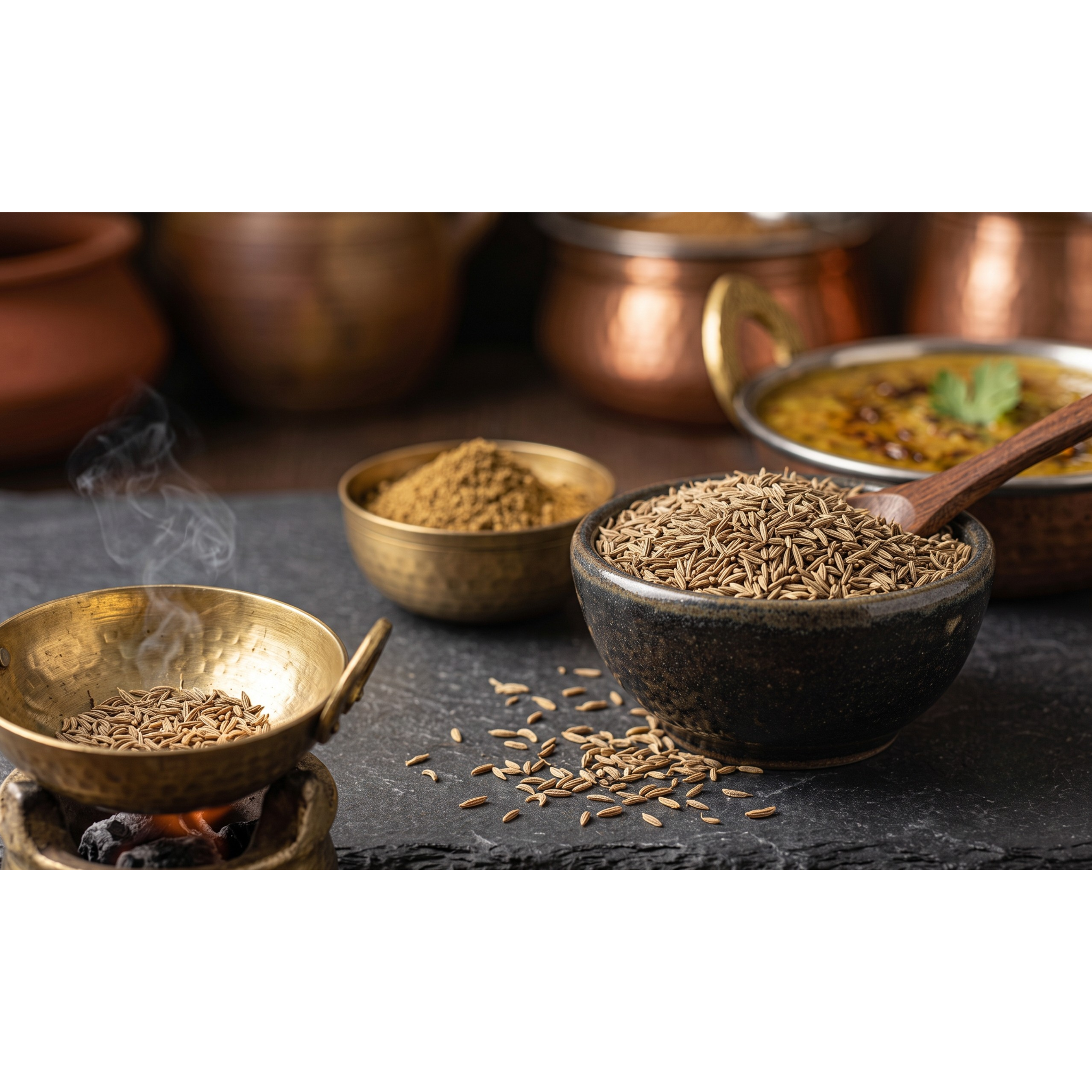
1. Whole Cumin Seeds
Whole cumin is the most common culinary form.
It is used directly in:
- Tadka
- Curries
- Dal
- Rice dishes
- Pickles
- Spice blends
- Vegetable preparations
Whole seeds are particularly useful when you want cumin’s aroma to develop gradually during cooking.
2. Cumin Powder
Ground cumin is made by grinding dried cumin seeds.
It is commonly used in:
- Chaat
- Raita
- Chutneys
- Curries
- Masalas
- Soups
- Marinades
- Spice blends
Freshly ground cumin generally has a stronger aroma than older pre-ground powder because grinding increases the surface area exposed to air.
3. Roasted Cumin / Bhuna Jeera
Cumin seeds are dry-roasted until they become fragrant and slightly darker.
Roasting creates a deeper, nuttier flavour and is particularly popular for:
- Raita
- Chaas
- Jaljeera
- Chaat
- Dahi-based dishes
- Spice mixes
Once cooled, roasted cumin can be ground into bhuna jeera powder.
4. Black Cumin vs Regular Cumin
The term “black cumin” can be confusing because it is used for different spices in different markets.
Regular cumin is Cuminum cyminum.
Some products marketed as black cumin may refer to different botanical species, including Nigella sativa, which is actually nigella/Kalonji and is not the same spice as regular cumin.
Similarly, Shahi Jeera (caraway) is a different spice from ordinary cumin.
Understanding the botanical identity of a spice is therefore important when buying cumin.
How Is Cumin Used in Indian Cooking?
Cumin is traditionally used in several forms.
1. Whole Cumin in Tadka
One of the most common uses of cumin is tadka.
Heat oil or ghee and add cumin seeds. As the seeds sizzle, they release their aromatic oils into the fat.
This forms the flavour base for dishes such as:
- Dal tadka
- Aloo jeera
- Kadhi
- Vegetable curries
- Rajma
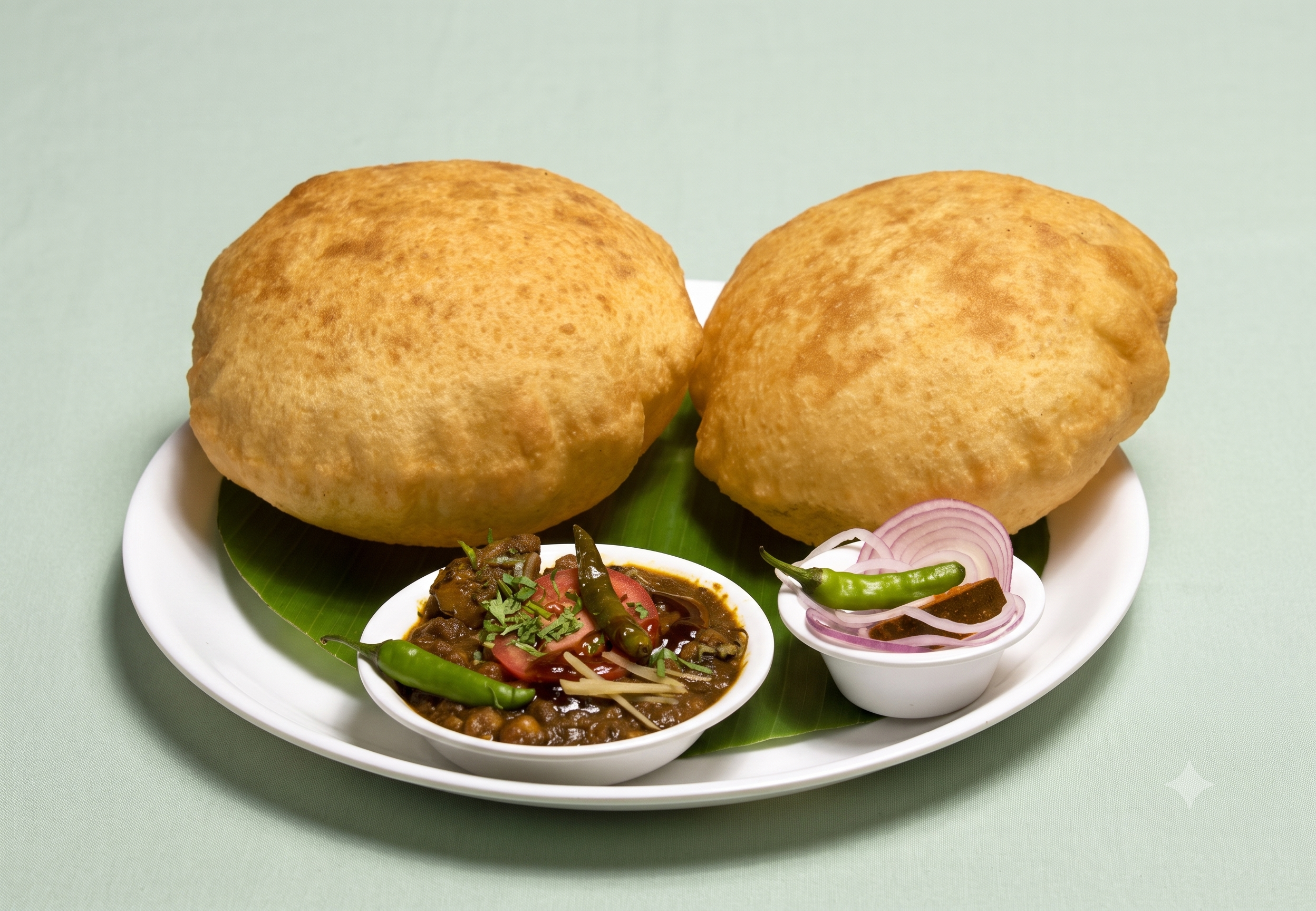
- Chole
Tip
Do not burn cumin. Once the seeds become fragrant and begin to crackle, add the remaining ingredients.
2. Dry-Roasted Cumin
Dry-roasting cumin intensifies its flavour.
How to roast cumin
- Heat a dry pan over low to medium heat.
- Add whole cumin seeds.
- Stir continuously.
- Roast until fragrant and lightly darker.
- Immediately transfer to a plate.
- Allow the seeds to cool before grinding.
Avoid high heat because burnt cumin becomes bitter.
3. Cumin Powder
Ground cumin is commonly added toward the end of cooking or sprinkled directly over finished dishes.
It is particularly popular in:
- Raita
- Chaat
- Chole
- Chaas
- Jaljeera
- Chutneys
- Curries
Popular Indian Dishes Made With Cumin
Cumin appears in everyday Indian cooking as well as festive recipes.
Jeera Rice
Basmati rice tempered with cumin, ghee and aromatic spices.
Jeera Aloo
Potatoes tossed with cumin, green chilli and Indian spices.
Dal Tadka
Lentils finished with a tempering of cumin, garlic, chilli and ghee or oil.
Chole
Cumin forms part of the aromatic spice base used in many chickpea preparations.
Raita
Roasted cumin powder adds a warm, smoky flavour to yogurt-based raita.
Jaljeera
A refreshing spiced drink traditionally made with roasted cumin and other aromatic ingredients.
Chaas
Roasted cumin is commonly used to add depth to spiced buttermilk.
Biryani & Pulao
Whole cumin can contribute to the aromatic foundation of rice dishes.
How to Make Roasted Cumin Powder at Home
Making bhuna jeera powder at home is simple.
Ingredients
- ½ cup whole cumin seeds
Method
- Place cumin seeds in a dry pan.
- Roast over low-medium heat.
- Stir continuously to prevent burning.
- Remove when fragrant and lightly browned.
- Cool completely.
- Grind into a fine or slightly coarse powder.
- Store in an airtight container.
For maximum flavour, make small batches rather than grinding large quantities at once.
Cumin in Regional Indian Cuisine
Cumin is used across India, but its role varies by region.
North India
Cumin is common in:
- Dal
- Rajma
- Chole
- Jeera rice
- Aloo preparations
- Raita
- Garam masala
Rajasthan
Cumin is particularly important in the region’s robust spice-forward cuisine and is used in vegetables, dals, breads and spice blends.
Gujarat
Jeera appears in snacks, vegetables, dals, chaas and various spice mixtures.
South India
While other spices often dominate regional tempering, cumin is used in several rasam, curry, masala and spice preparations.
Bengal & Eastern India
Cumin is frequently incorporated into spice blends and vegetable, fish and meat preparations.
How to Store Cumin
Proper storage is essential because cumin’s aroma comes from volatile oils that gradually dissipate when exposed to air, heat and light.
For Whole Cumin Seeds
Store cumin in:
- An airtight container
- A cool cupboard
- A dry environment
- A place away from direct sunlight
- A location away from stove heat and steam
Under good storage conditions, whole cumin can retain good quality for an extended period.
For Ground Cumin
Ground cumin loses aroma faster because its increased surface area exposes more of its volatile compounds to air.
For best flavour, use freshly ground cumin whenever possible and avoid storing large quantities for long periods.
Avoid
- Open containers
- Moisture
- Direct sunlight
- Refrigerating unless necessary
- Storing directly beside the stove
How to Identify Good-Quality Cumin
Good-quality cumin should have a strong, clean and characteristic aroma.
Look for seeds that are:
- Whole and well formed
- Uniform in size
- Naturally greyish-brown
- Dry and free-flowing
- Free from excessive dust
- Free from visible insects
- Free from excessive stalks and foreign material
The Aroma Test
Take a small amount of cumin and gently crush it between your fingers.
Good cumin should release a distinct warm, earthy aroma.
If the seeds have little aroma or smell stale, musty or chemically unusual, their quality may have deteriorated.
Cumin Adulteration: What Should Consumers Look For?
Because spices are agricultural products, quality can vary significantly depending on sourcing, cleaning, processing and storage.
Potential concerns with poor-quality spices include:
- Excessive foreign matter
- Stems and plant debris
- Dust and soil
- Damaged or immature seeds
- Stale or oxidized spice
- Unwanted fillers or other materials
Consumers should therefore look beyond colour alone when evaluating cumin.
A strong natural aroma, clean appearance, proper packaging and traceable sourcing are all useful indicators of quality.
Cumin and Purity: Why Eirthum Quality Matters
At Eirthum, the focus is not simply on how the spice looks in the jar. The goal is to make purity and quality more transparent to the consumer.
Eirthum sources cleaned whole cumin seeds and uses controlled processing for its cumin products. According to Eirthum’s product specifications, its whole cumin is 99.5% pure, while its cumin powder is processed through cold-grinding to help preserve the spice’s natural characteristics.
For consumers, quality should ideally be supported by more than packaging claims. Testing, sourcing information, batch identification and transparent quality documentation provide a stronger basis for evaluating a spice.
Final Takeaway
Cumin may be a small seed, but it plays a remarkably large role in Indian cuisine. From the first crackle of jeera in hot ghee or oil to the smoky aroma of freshly roasted bhuna jeera, it is one of the spices that defines the character of Indian cooking.
Whether used whole, roasted or ground, the quality of cumin matters. Freshness, aroma, cleanliness, sourcing and proper storage all contribute to the final flavour in your food.
And when choosing cumin, don’t just ask “Does it look good?”
Ask:
“Is it clean, aromatic, traceable and genuinely pure?”
That is where quality begins.