
How to Identify the Best Masala Brand in India: A Guide to Purity & Sourcing
In an era of food safety alerts and mass-market adulteration recalls, how can home cooks tell what actually separates a truly safe, high-grade masala from ordinary commercial powder? This guide breaks down the scientific benchmarks every trusted spice brand must meet.
Why We Do Batch Lab Testing
The commercial spice industry in India and globally has faced severe adulteration scandals—from lead chromate added to brighten turmeric to synthetic dyes in chilli powder and pesticide residue bans in exported masalas.
Industrial Metanil Yellow in turmeric, Lead Chromate for artificial color, Sudan Red dyes in chilli powder, Silica anti-caking agents, and excess Ethylene Oxide pesticide residues.
Eirthum's founding principle is that trust cannot be built on slogans alone. It requires transparent, verifiable data. By making every test report public, we ensure complete peace of mind for every family.
View Public NABL Lab ReportsHeavy Metal Screening
Rigorous ICP-MS testing to confirm zero lead, arsenic, cadmium, or mercury contamination.
Pesticide Residue Analysis
Multi-residue testing for over 200 banned chemical pesticides and fungicides.
Zero Synthetic Dyes
Chromatography verification ensuring 100% natural, uncolored spice powder purity.
Active Compound Levels
Measuring true Curcumin % in turmeric and Piperine % in black pepper for maximum health benefit.
Single-Origin Terroirs vs "Spent" Industrial Spices
A major hidden practice in low-cost commercial spice manufacturing is the blending of spent spices—the depleted fibrous waste left over after oleoresin and essential oils are industrially extracted. A trusted brand procures unbroken, whole spices directly from native regional farms.
Heirloom Salem Turmeric
Naturally packed with active Curcumin (>3.5%). Tested 100% free of lead chromate, industrial metanil yellow, or chalk powders.
Tellicherry Black Pepper
Matured bold peppercorns from ancient Kerala vines. Milled pure without papaya seed fillers or mineral oil surface polishing.
Sun-Dried Whole Pods
Golden ratio of pungent Guntur chillies for measured heat and Byadgi chillies for intense natural red color without Sudan dyes.
Grade-A Bold Cumin (Jeera)
Procured from India's premier cumin belt. Whole, heavy seeds rich in cuminaldehyde essential oils for authentic digestive depth.
Green Coriander (Dhania)
Famous for crisp citrus-floral linalool aroma. Milled whole without spent husk dilution or artificial green food coloring.
Sun-Cured Kasuri Methi
The foundation of authentic restaurant-style curries. Whole hand-picked fenugreek leaves naturally shade-cured for fragrance.
Why Grinding Temperature Determines Real Spice Aroma
Spices derive their signature aroma and therapeutic value from delicate volatile essential oils (eugenol, anethole, cineole). When exposed to heat above 50°C, these oils evaporate into the factory air, leaving behind flat, flavorless powder.
High-Speed Hammer Milling (70°C – 90°C)
Standard mass manufacturing runs continuous high-speed pulverizers. The extreme friction generates heat up to 90°C, scorching natural compounds.
- Essential aromatic oils boil off during the grinding cycle
- Thermal breakdown destroys natural antioxidants and enzymes
- Requires synthetic aroma enhancers or larger quantities in cooking
- Loses fragrance quickly after the package is opened at home
Low-Temperature Cool Milling (<40°C)
Controlled slow-revolution milling keeps temperatures strictly under 40°C. This locks in 100% of the active volatile oils directly within the spice particles.
- 100% volatile essential oils retained in every grain
- Immediate aroma blooms the instant you open the container
- Zero thermal degradation of bioactive therapeutic properties
- High potency: smaller quantity needed to achieve rich, layered taste
Advanced Purification & Aroma-Lock Protection
True spice excellence doesn't just stop at cold milling. Modern standards require multi-stage pre-milling purification and high-barrier packaging to ensure zero contamination from farm to plate.
Multi-Stage Optical Sorting
Before milling, whole spices pass through magnetic separators, vibrating destoners, and multi-camera optical sorters to eliminate dirt, sticks, stones, and hollow seeds.
Air-Classifying Particle Control
Spices are pulverized in air-cooled chambers where internal air currents separate particles by micron size without generating friction heat, ensuring consistent, velvety texture.
4-Layer Aroma-Lock Packaging
Ground spices rapidly oxidize when exposed to air, humidity, and UV light. High-barrier multi-layer packaging and airtight seals lock out oxygen to protect volatile oils for over 12 months.
How to Test Your Kitchen Spices at Home
You don't need a chemical laboratory to spot common spice adulteration. Here are three simple, effective tests recommended by food safety researchers that you can perform in your kitchen today.
The Water Glass Test
The Water Float Test
The Palm Warmth Test
Formulating Master Blends: Proportions & Whole Spices
A superior masala blend is crafted through the golden ratio of roasted whole spices—never diluted with cheap coriander overloading, added starches, MSG, or artificial anti-caking silica. Explore our batch-tested formulations below.
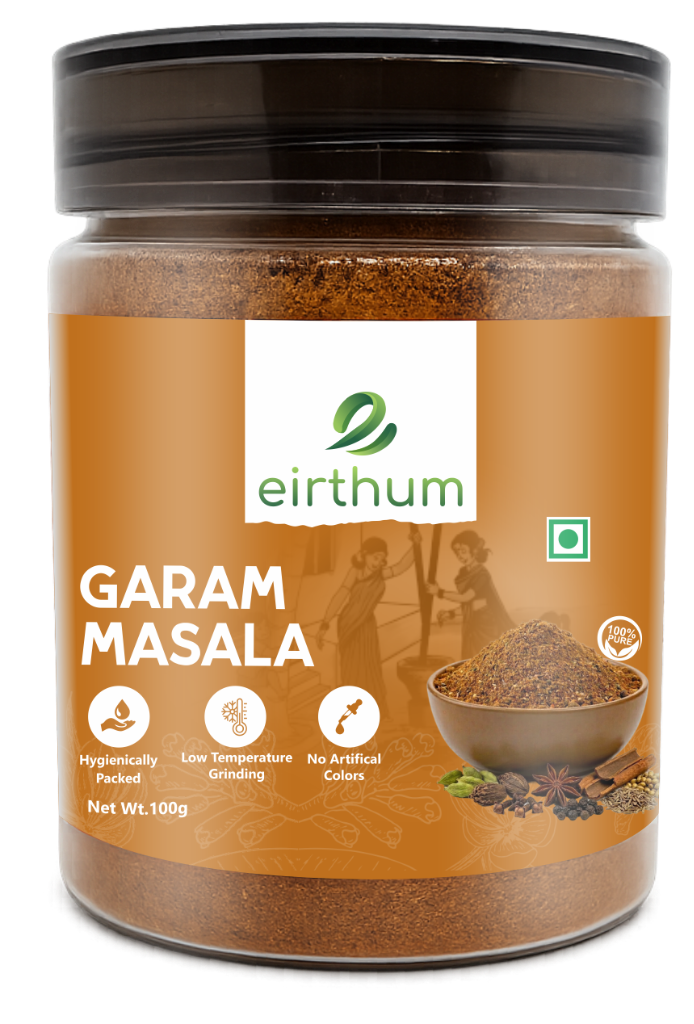
Eirthum Garam Masala
16+ whole spices including black cardamom, mace, cinnamon, and cloves. Slow roasted and cold milled to protect delicate aromatic essential oils without coriander overload.
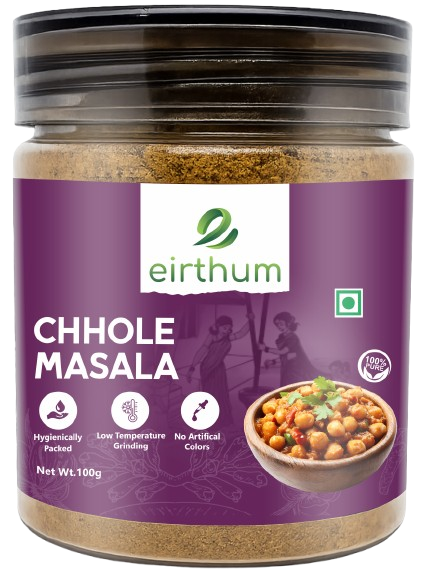
Eirthum Chhole Masala
Crafted with authentic dried pomegranate seeds (anardana), dry mango powder (amchoor), cassia, and black cardamom for dark, tangy, restaurant-style Amritsari chhole.
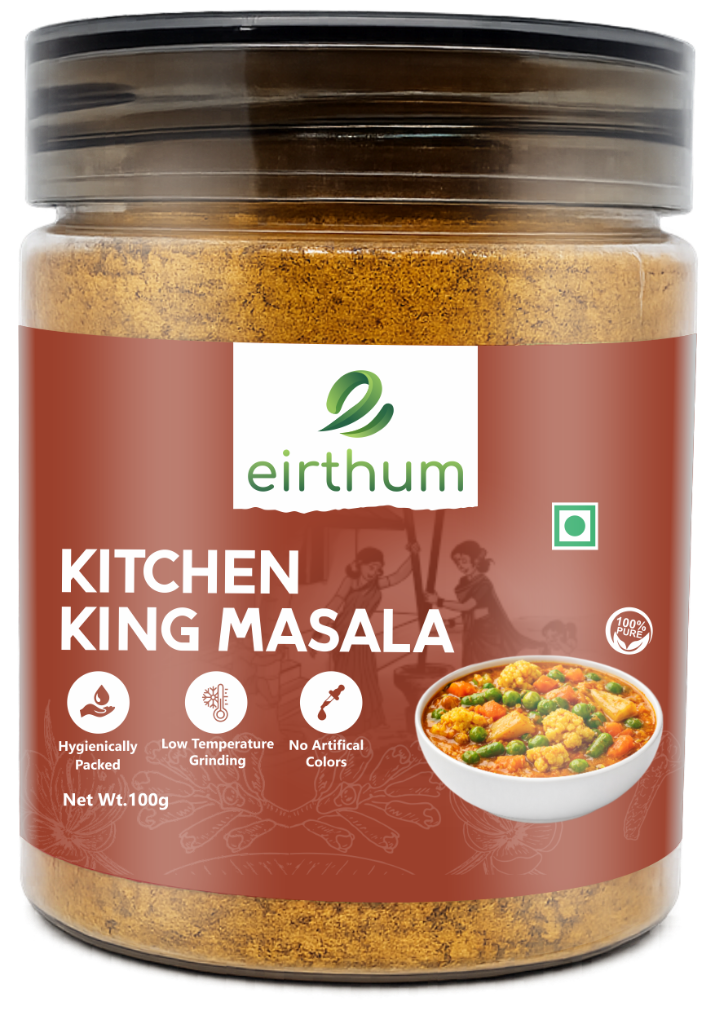
Eirthum Kitchen King Masala
The undisputed sovereign of daily cooking. A master harmony of turmeric, coriander, cumin, dry ginger, nutmeg, and green cardamom for mixed vegetable gravies.
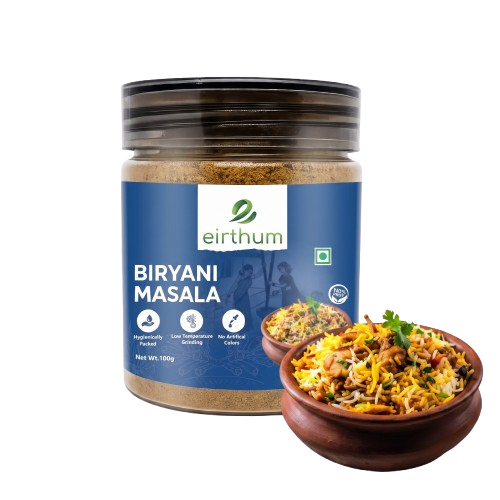
Eirthum Biriyani Masala
Nizam royal recipe with star anise, stone flower (dagad phool), mace, green cardamom, and cloves. Infuses every single rice grain with layered royal aroma.
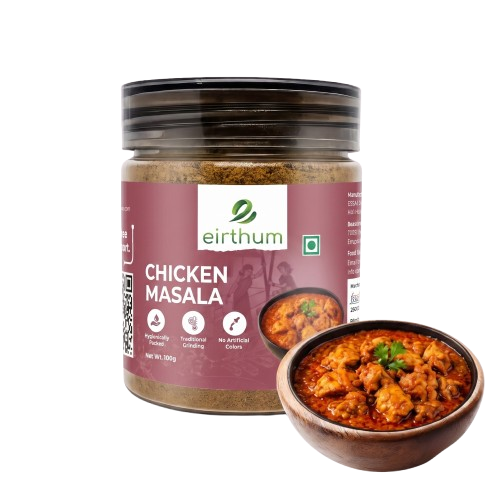
Eirthum Chicken Masala
Robust, deeply savory spice profile tailored for chicken curries and roasts. Sourced whole spices ground slowly to preserve spicy heat and thick gravy body.
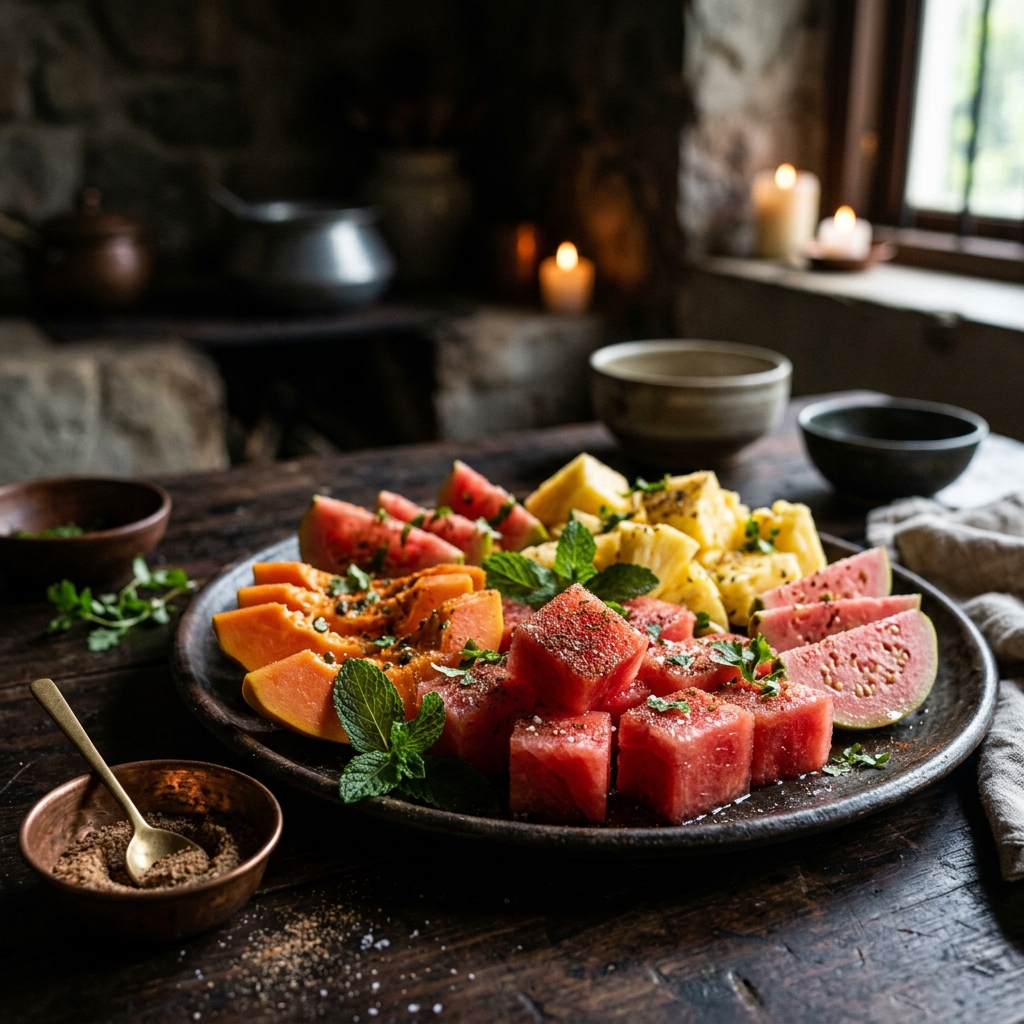
Eirthum Chaat Masala
Tangy, zesty, and refreshing. Crafted with sun-dried raw mango (amchoor), Himalayan black salt, toasted cumin, and mint for fruit chaats, snacks, and salads.
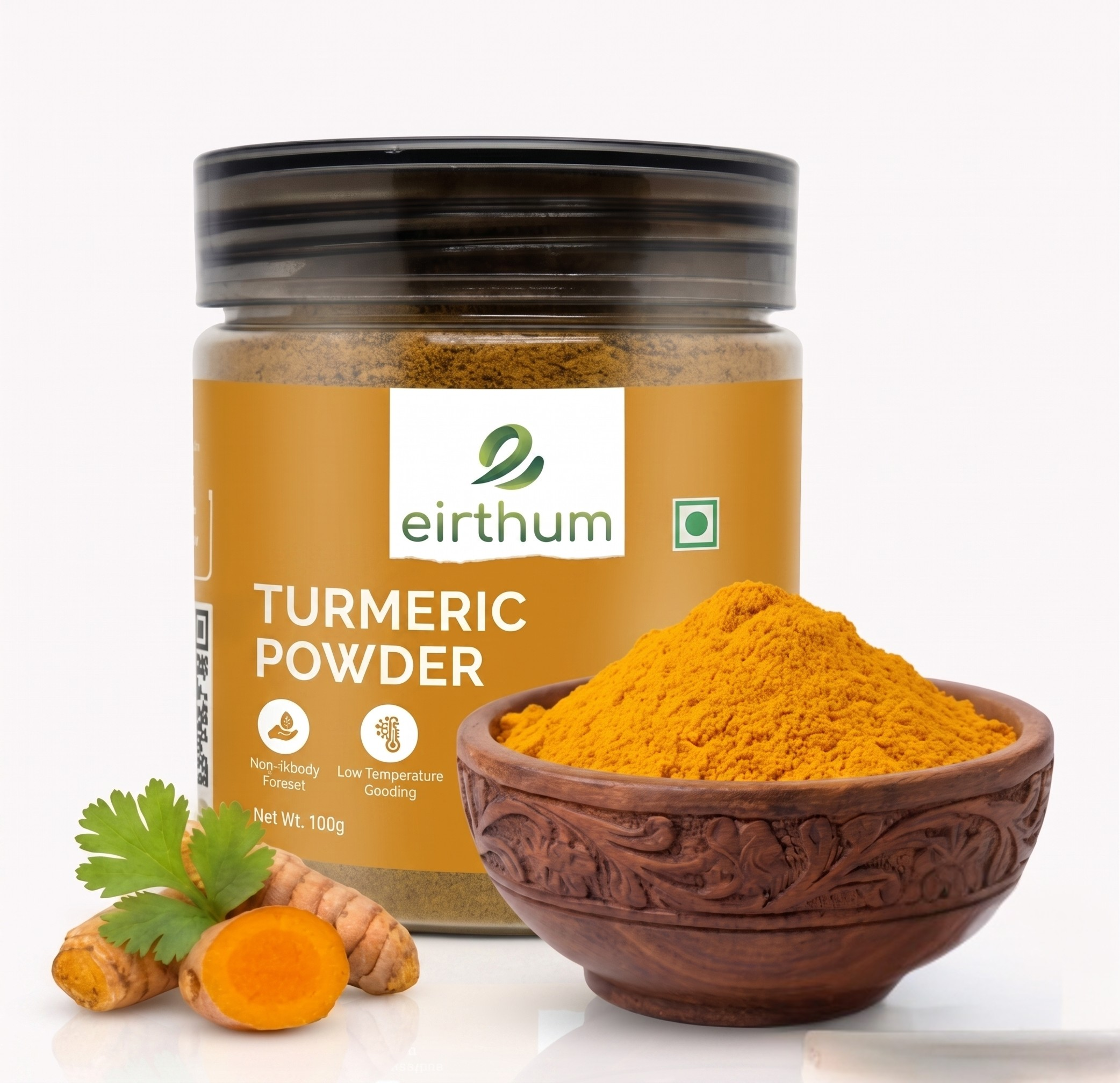
Salem Turmeric Powder
Single-origin heirloom Salem rhizomes with >3.5% verified natural curcumin. 100% certified free of lead chromate and metanil yellow chemical dyes.
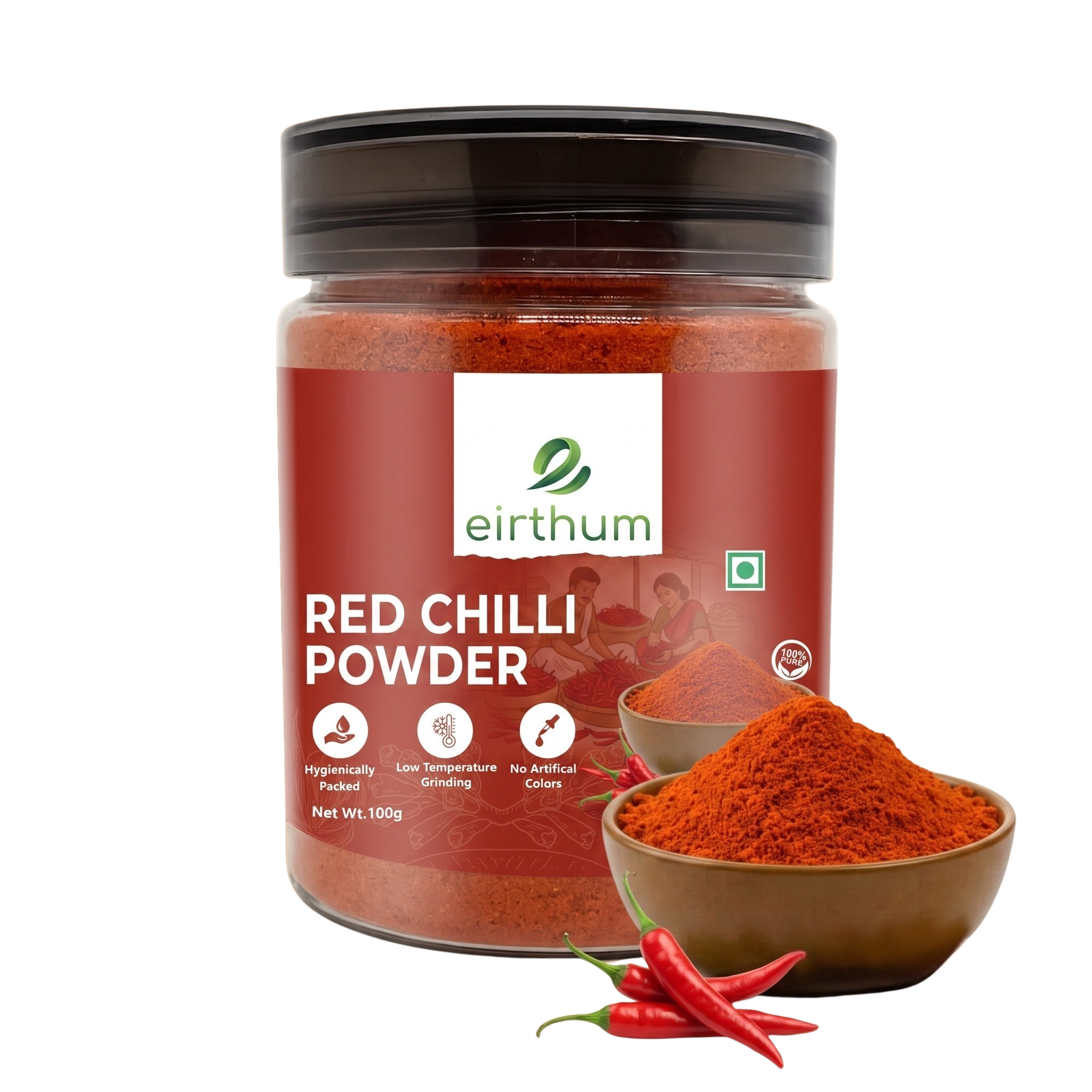
Eirthum Red Chilli Powder
Sun-dried whole pods delivering rich natural red color and measured capsaicin heat. Certified zero Sudan Red I-IV dyes or brick powder.
.png)
Black Pepper Powder
Harvested from mature Malabar vines in Kerala. Sifted to remove papaya seeds and mineral oil polish, delivering sharp, clean heat.
Comparing Quality Standards Across Spice Categories
Compare the scientific and sourcing differences between batch-tested transparent brands, commercial mass-market labels, and loose market spices.
| Evaluation Parameter | Eirthum Batch-Tested Standard | Commercial Mass-Market Labels | Loose / Unpackaged Spices |
|---|---|---|---|
| Lab Testing Frequency | ✓ Every single production batch in NABL labs | Sample only (once a year or never) | Zero laboratory testing |
| Public Test Reports | ✓ 100% Open NABL Certificate on QR Code | Kept internal / Not disclosed | None available |
| Heavy Metals & Lead Chromate | ✓ Certified 0% Lead Chromate & ICP-MS Verified | Occasional regulatory bans & recalls | Severe risk of toxic adulterants |
| Grinding Temperature | ✓ Cool-milled <40°C (Essential oils preserved) | High-speed friction 70°C–90°C (Oils burnt) | Unregulated high-heat stone grinding |
| Fillers & Added Starch | ✓ 0% Starch, 0% Spent Spice, 0% Silica | Husk, spent spice, anti-caking silica used | Sawdust, chalk, flour adulteration risk |
| Sourcing Transparency | ✓ Direct single-origin regional farmer terroirs | Blended bulk auctions with middlemen | Unknown origin & mixed age stock |
How to Evaluate Any Spice Label in 30 Seconds
Four simple checks to perform before buying any spice pack at the supermarket or online.
Check for Batch QR Verification
Don't rely on taglines. The safest brands place a QR code on every pack leading directly to third-party NABL lab test results for that specific batch.
Look for Grinding Temperature
Look for "cold ground" or "low-temperature milled (<40°C)" indicators on the label. This guarantees that volatile aromatic oils remain intact.
Examine the Ingredient List
A pure blend should only contain named whole spices. Reject products listing starch, silica anti-caking agents, artificial flavors, or MSG.
Verify Single-Origin Terroir
High-grade spices declare the region of harvest (e.g. Salem Turmeric, Malabar Pepper, Unjha Cumin) rather than generic unstated bulk origins.
Frequently Asked Questions
Everything you need to know about evaluating spice quality, purity standards, and lab reports.
What makes a masala brand truly the best in India?
Rather than marketing hype, the best masala brand is defined by measurable standards: 100% batch-level NABL lab testing for zero toxic heavy metals and dyes, single-origin farmer sourcing to avoid spent spice residues, and low-temperature cold milling under 40°C to protect natural essential oils.
Why is batch lab testing so essential for everyday spices?
Because spices pass through complex supply chains where adulterants like lead chromate (in turmeric), Sudan Red (in chilli), and prohibited pesticide residues can be introduced. Testing every batch in government-accredited NABL laboratories is the only foolproof guarantee of safety.
What does cool-milling mean and why does it affect taste?
Standard high-speed pulverizers generate heat up to 90°C during grinding, evaporating the delicate aromatic terpenes and essential oils. Cool-milling keeps friction temperatures below 40°C, preserving 100% of the natural fragrance, intense taste, and antioxidant benefits.
How do I scan and verify the lab test report of an Eirthum pack?
Every Eirthum jar and pouch is stamped with a unique batch QR code. Scan it with any smartphone camera to open the authentic, downloadable NABL lab test report for that exact batch.
Are Eirthum masalas free from starch fillers and silica?
Yes, 100%. Eirthum products contain zero added cornstarch, rice flour, artificial food colorings, synthetic flavor enhancers, MSG, or silica anti-caking additives.
How should I store pure cold-ground spices to maintain freshness?
Keep your spice jars sealed tightly in a cool, dry, and dark cupboard away from direct sunlight and stovetop steam. Because cold-milled spices retain their volatile oils, proper storage keeps them intensely aromatic for months.
Experience the Benchmark in Spice Purity
Cook with complete peace of mind. Discover 100% batch-tested, cold-ground Indian spices sourced directly from heirloom farmer terroirs.