Red Chilli (Lal Mirch): Types, Heat Levels, Storage and Cooking Uses
Explore the vibrant world of Red Chilli (Lal Mirch). Understand Kashmiri vs Tikhalal varieties, capsaicin heat, natural color extraction, and safe usage.

Eirthum Research Team
Nutrition & Quality Specialist
Published August 9, 2026
7 min read
Red Chilli (Lal Mirch) gives Indian cuisine its trademark fiery warmth, rich red color, and mouth-watering pungency. From mild Kashmiri chillies to fiery Guntur varieties, understanding red chilli helps you master balance in cooking.
What Is Red Chilli?
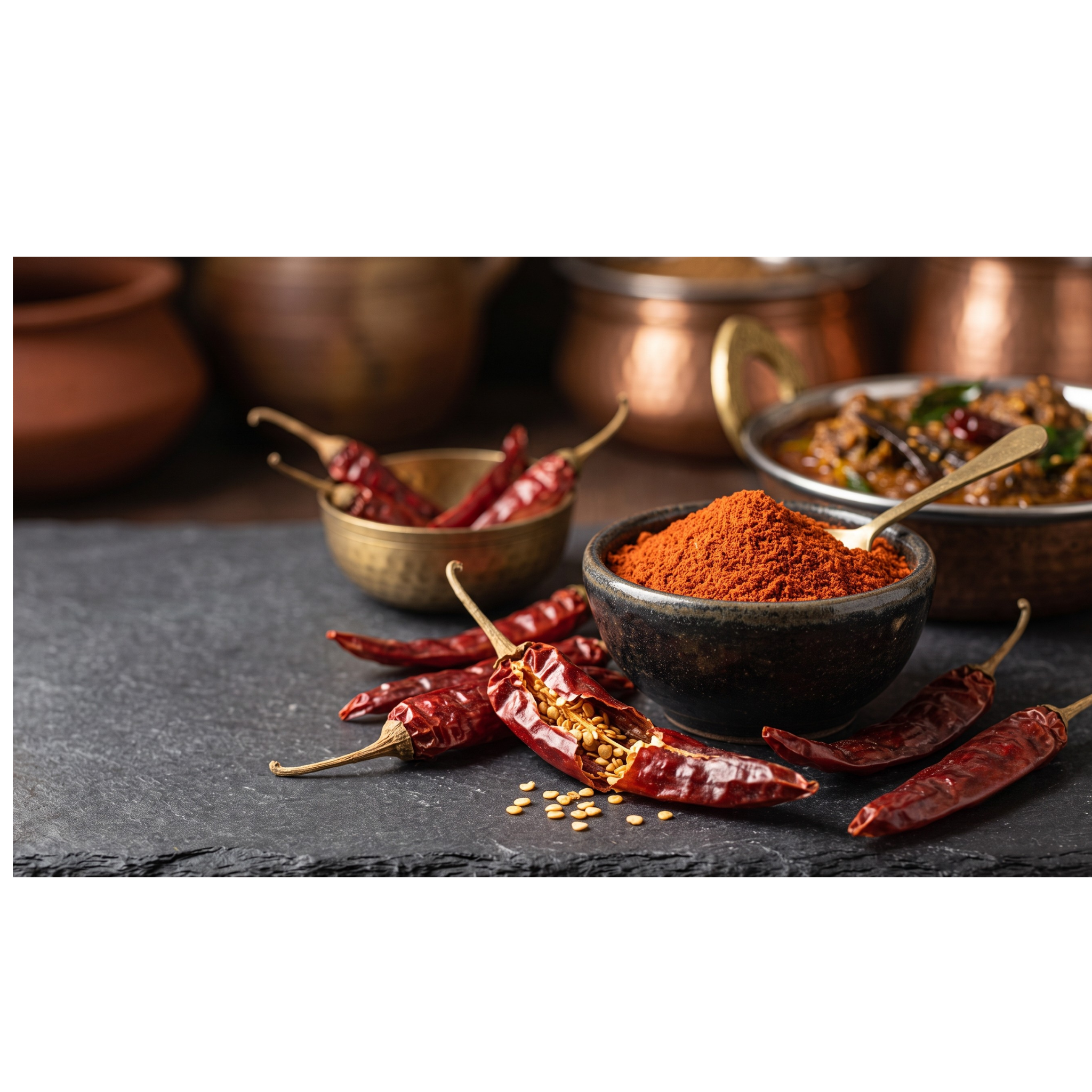
Red chilli is derived from ripe, sun-dried fruits of Capsicum annuum or Capsicum frutescens. The active heat component is capsaicin, concentrated in the inner white membranes and seeds. The vibrant red pigment comes from natural carotenoids (capsanthin and capsorubin).
Red Chilli Name in Different Indian Languages
Types & Varieties of Indian Red Chillies
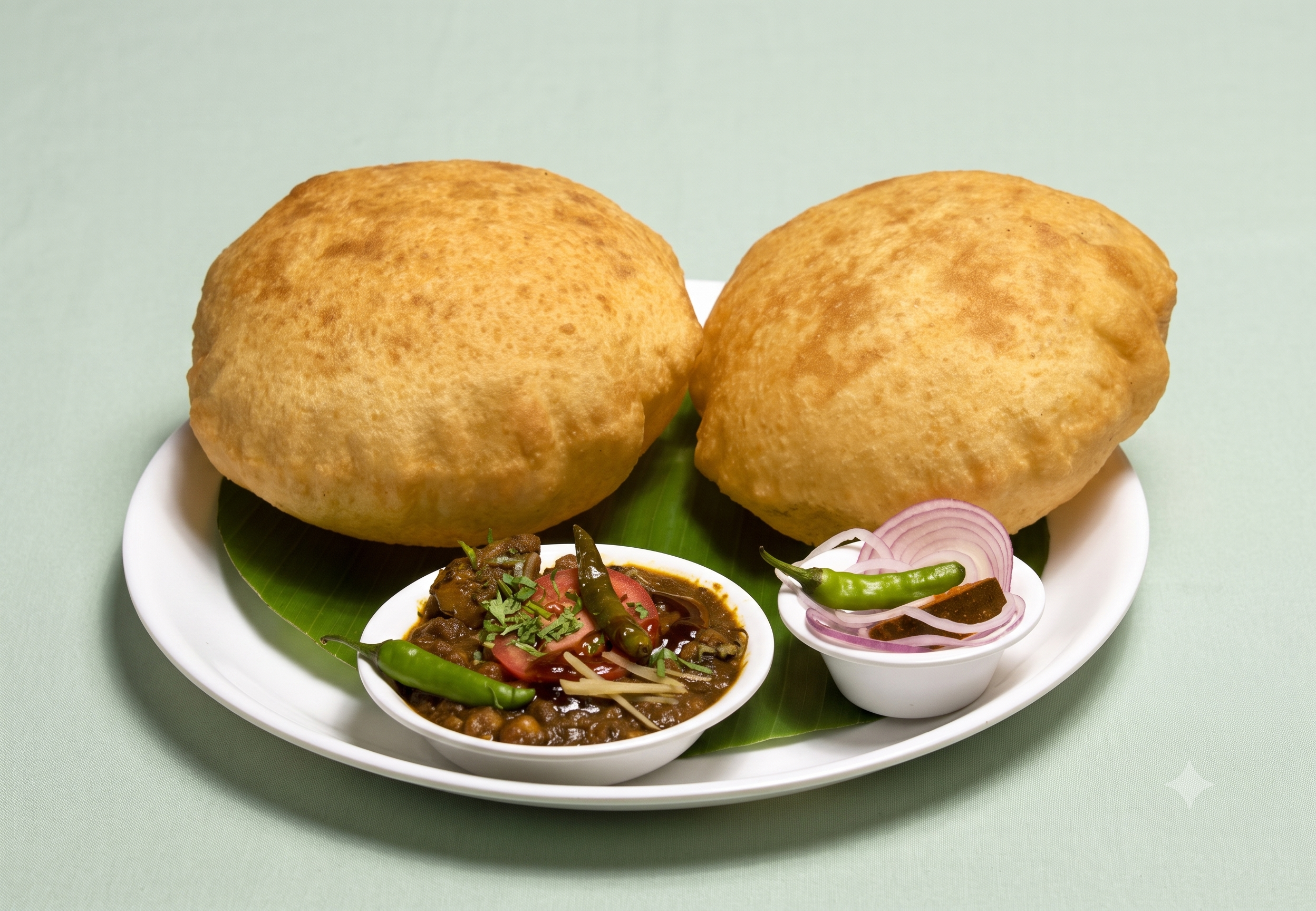
How Is Red Chilli Used in Indian Cooking?
How to Store Red Chilli Powder
Capsaicin and natural color pigments degrade under light and heat. Store red chilli powder in airtight glass or ceramic jars in a dark pantry. Keep away from humidity to prevent caking and color fading.
How to Identify Pure Red Chilli Powder
Commercial red chilli powders are sometimes adulterated with brick dust, synthetic Sudan dyes, or starch. Perform the simple Water Float Test: Stir 1 teaspoon red chilli powder into a glass of plain water. Pure chilli powder settles slowly leaving water clear or pale pink. Synthetic dye will instantly dissolve into bright artificial red trails in water; brick dust settles quickly as heavy gritty sediment.
Eirthum Purity Standard
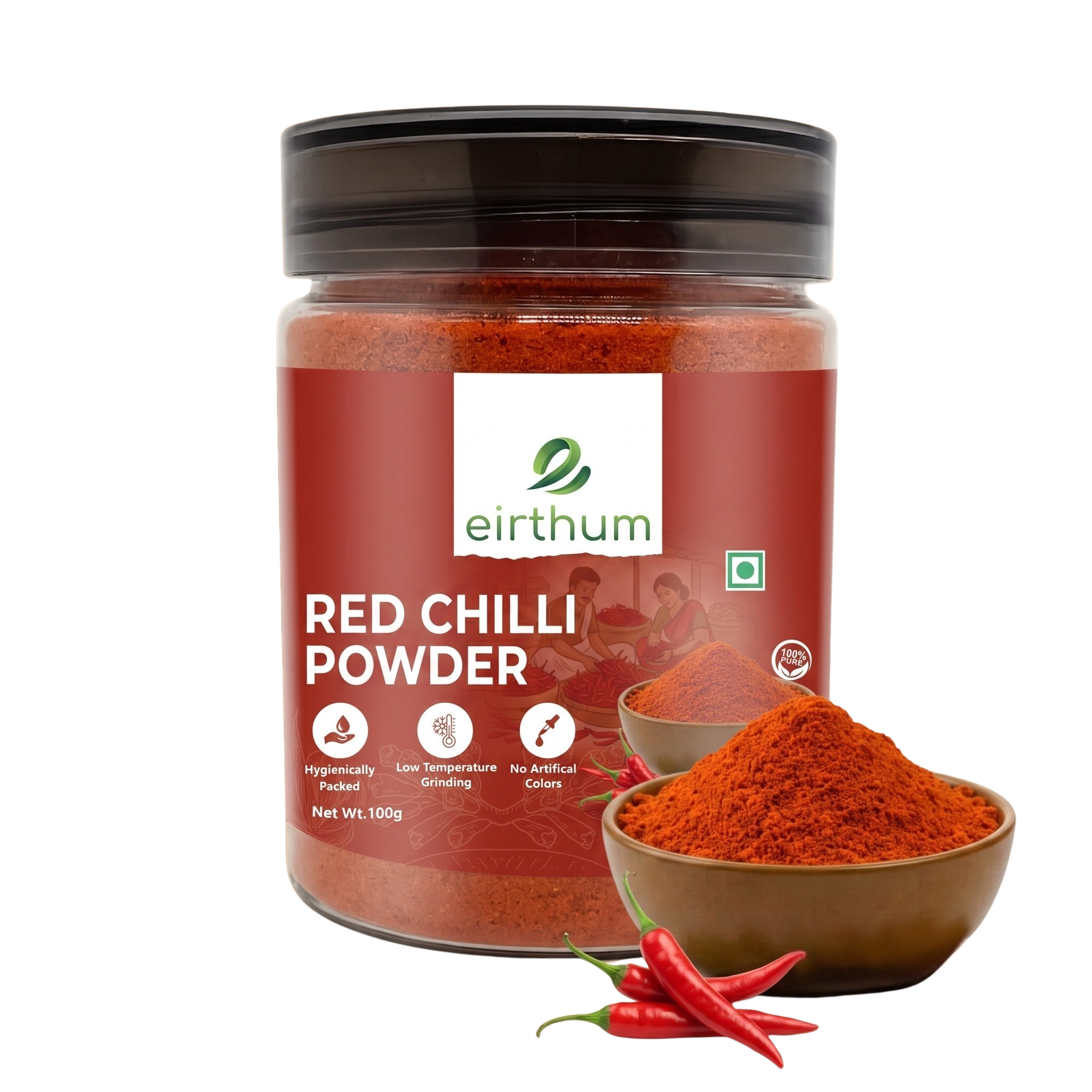
Eirthum uses 100% stemless, sun-dried Kashmiri and selected Indian chillies cold-ground without added synthetic colors, artificial oils, or chemical preservatives.
Frequently Asked Questions
Common questions about Red Chilli (Lal Mirch): Types, Heat Levels, Storage and Cooking Uses, culinary usage, purity testing, and storage.
What are the culinary uses of Red Chilli (Lal Mirch): Types, Heat Levels, Storage and Cooking Uses?
+
Red Chilli (Lal Mirch): Types, Heat Levels, Storage and Cooking Uses is widely used in traditional Indian cooking to impart authentic aroma, rich flavor, and natural depth to curries, gravies, and traditional ground spices dishes.
How do I identify pure and unadulterated Red Chilli (Lal Mirch): Types, Heat Levels, Storage and Cooking Uses?
+
Pure Red Chilli (Lal Mirch): Types, Heat Levels, Storage and Cooking Uses retains its natural color, potent aroma, and essential oils without synthetic dyes or chemical additives. Look for batch-tested certifications and public lab reports.
How should Red Chilli (Lal Mirch): Types, Heat Levels, Storage and Cooking Uses be stored for maximum freshness?
+
Store Red Chilli (Lal Mirch): Types, Heat Levels, Storage and Cooking Uses in an airtight glass container in a cool, dry, dark place away from direct heat and moisture to retain essential oils and aroma.
What makes Eirthum's Red Chilli (Lal Mirch): Types, Heat Levels, Storage and Cooking Uses different from market brands?
+
Eirthum sources Red Chilli (Lal Mirch): Types, Heat Levels, Storage and Cooking Uses directly from heirloom farms and processes it using low-temperature cold-grinding methods. Every batch is independently lab-tested with public certificates.
Eirthum Research Team
Nutrition & Quality Specialist
Part of the Eirthum Quality & Research Initiative dedicated to transparent food
testing, cold-ground spice processing, and 100% pure organic ingredients.